



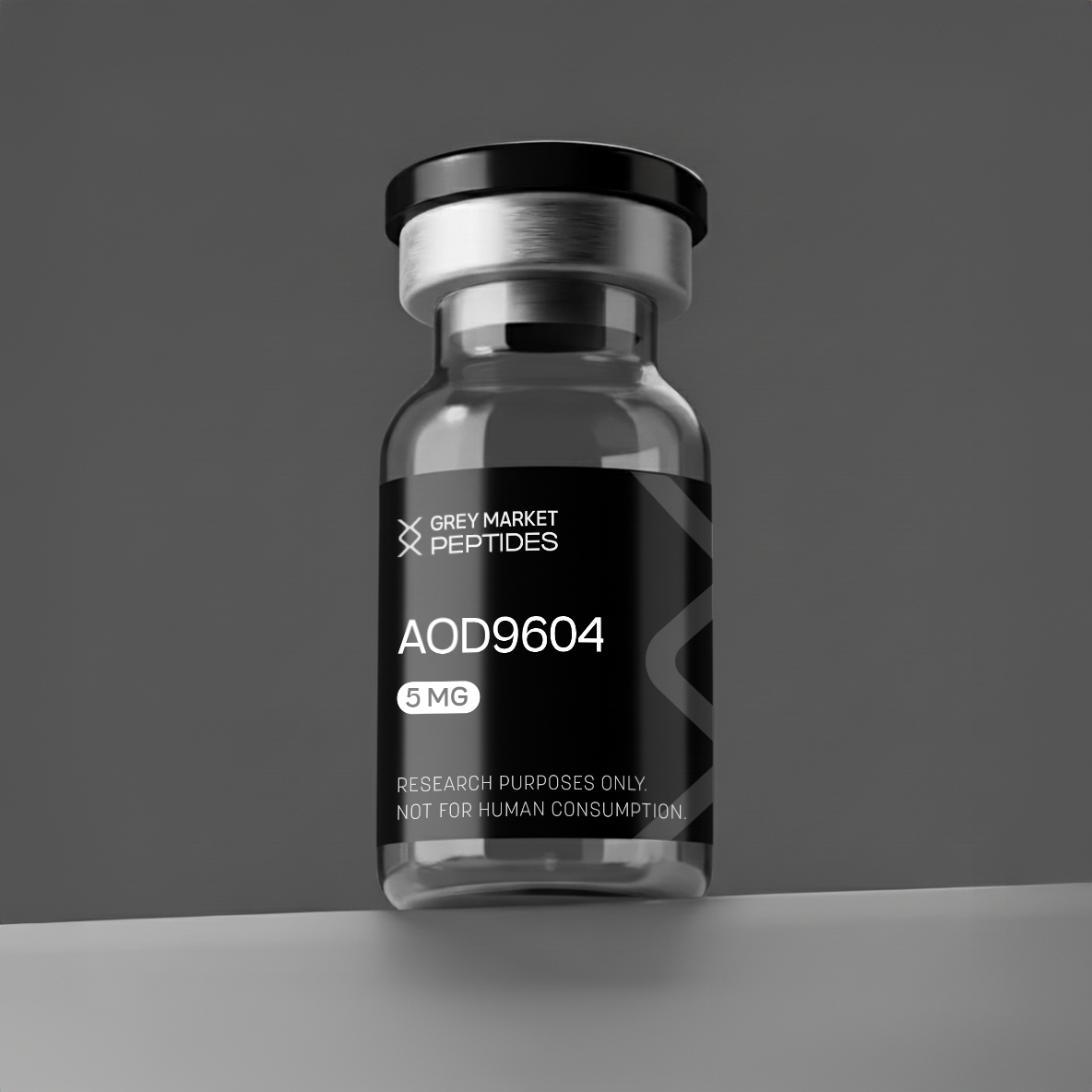
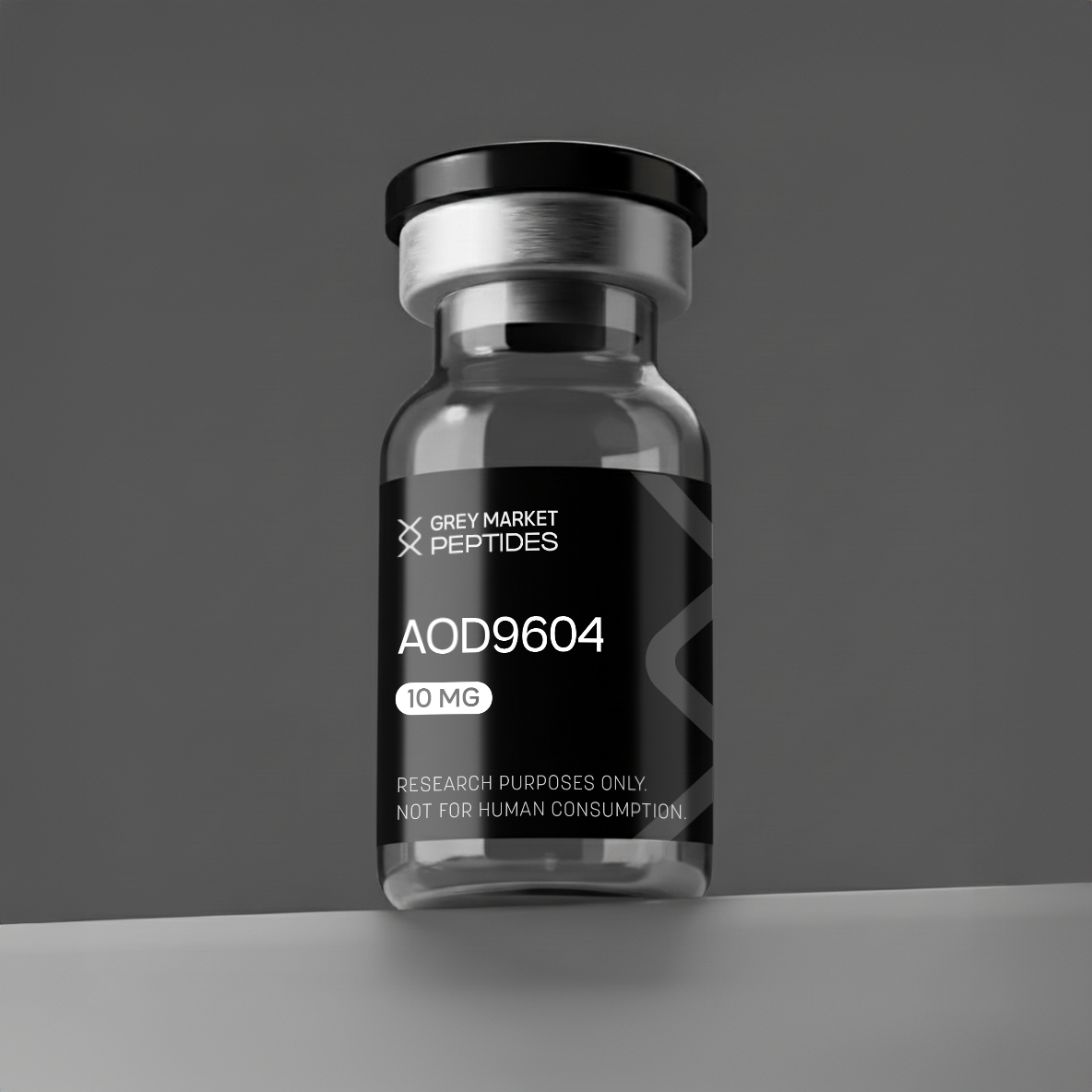
AOD9604
AOD9604 is a synthetic peptide fragment derived from human growth hormone. It is studied in preclinical models for its relationship with lipid metabolism signaling and structure-function research involving hormone fragments.
This peptide is for research purposes only. Not for human consumption.
Description
Growth Hormone Fragment Analysis
AOD9604 represents a defined sequence isolated from human growth hormone to examine structure-function relationships in controlled research settings [1]. By focusing on a fragment rather than the full hormone, researchers can explore signaling domains relevant to metabolic pathways with more targeted experimental design. This approach is commonly used to separate fragment behavior from broader endocrine effects in mechanistic studies.
Lipid Metabolism Research Context
Preclinical studies have explored AOD9604 in relation to pathways associated with lipolysis and fatty acid metabolism [2]. Researchers use controlled models to examine peptide-mediated signaling, enzymatic activity patterns, and adipocyte-related mechanisms. Findings from these studies contribute to the scientific conversation on how peptide fragments may influence metabolic pathway signaling.
Handling and Formulation Variables in Studies
AOD9604 is also referenced in peptide handling research, including solvent compatibility, solubility behavior, and degradation monitoring [1]. These considerations matter when researchers aim to keep experimental conditions consistent and minimize variability in assay outputs.
Key Specs
- Peptide class: growth hormone fragment
- Research context: metabolic signaling, lipid pathway studies, peptide handling variables
- References: PubChem and PubMed [1,2]
Referenced Citations
- PubChem, AOD9604: https://pubchem.ncbi.nlm.nih.gov/compound/AOD9604
- PubMed, Growth hormone fragments and lipid metabolism context:
https://pubmed.ncbi.nlm.nih.gov/15687338/
Additional information
| Size | 5mg, 10mg |
|---|
Growth Hormone Fragment Analysis
AOD9604 represents a defined sequence isolated from human growth hormone to examine structure-function relationships in controlled research settings [1]. By focusing on a fragment rather than the full hormone, researchers can explore signaling domains relevant to metabolic pathways with more targeted experimental design. This approach is commonly used to separate fragment behavior from broader endocrine effects in mechanistic studies.
Lipid Metabolism Research Context
Preclinical studies have explored AOD9604 in relation to pathways associated with lipolysis and fatty acid metabolism [2]. Researchers use controlled models to examine peptide-mediated signaling, enzymatic activity patterns, and adipocyte-related mechanisms. Findings from these studies contribute to the scientific conversation on how peptide fragments may influence metabolic pathway signaling.
Handling and Formulation Variables in Studies
AOD9604 is also referenced in peptide handling research, including solvent compatibility, solubility behavior, and degradation monitoring [1]. These considerations matter when researchers aim to keep experimental conditions consistent and minimize variability in assay outputs.
Key Specs
- Peptide class: growth hormone fragment
- Research context: metabolic signaling, lipid pathway studies, peptide handling variables
- References: PubChem and PubMed [1,2]
Referenced Citations
- PubChem, AOD9604: https://pubchem.ncbi.nlm.nih.gov/compound/AOD9604
- PubMed, Growth hormone fragments and lipid metabolism context:
https://pubmed.ncbi.nlm.nih.gov/15687338/



Reviews
There are no reviews yet.