



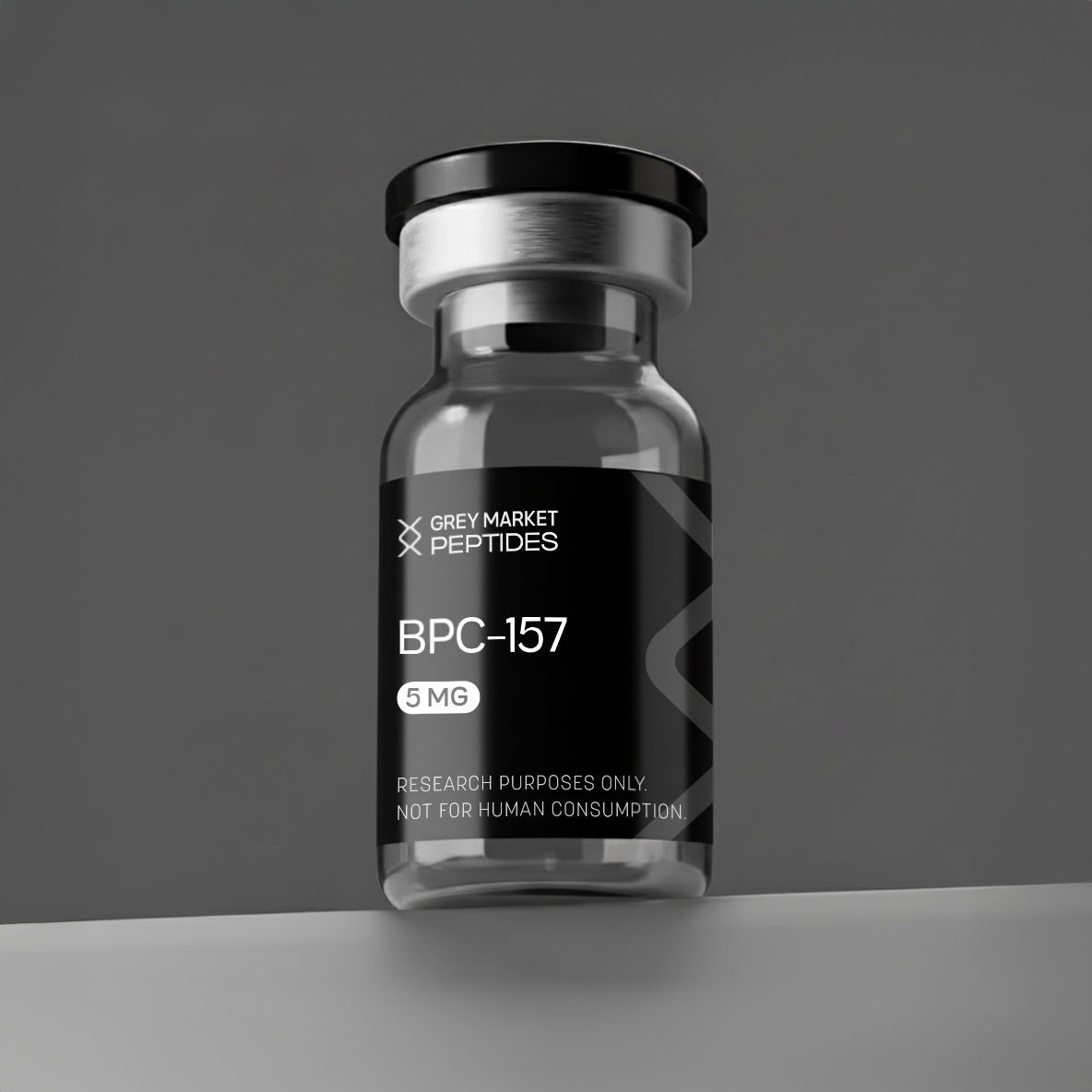
BPC-157
BPC-157 is a synthetic pentadecapeptide derived from a gastric protein fragment. It is widely studied in experimental models for its interactions with cellular signaling pathways and tissue response research contexts.
This peptide is for research purposes only. Not for human consumption.
Description
Peptide Identity and Structural Notes
BPC-157 is a 15-amino-acid peptide referenced in literature discussing naturally occurring gastric peptide fragments and synthetic analogs [1]. Researchers often note its stability and suitability for controlled experimental handling, making it a frequent tool peptide in mechanistic studies focused on signal behavior and cellular response.
Cell Signaling and Response Pathways
Experimental research has explored BPC-157 in relation to angiogenic signaling, cell migration, and intracellular communication pathways [2]. These studies typically focus on characterizing pathway markers, signaling intermediates, and model-dependent response behavior under controlled conditions.
Use in Comparative Peptide Studies
BPC-157 is commonly included in comparative peptide panels where researchers evaluate how different sequences influence signaling patterns across cell types or assay conditions [1,2]. Its defined sequence supports reproducibility when comparing outcomes between runs or laboratories.
Key Specs
- Peptide length: 15 amino acids
- Research context: signaling studies, response pathway models, comparative panels
- References: PubChem and PubMed [1,2]
Referenced Citations
- PubChem, BPC-157: https://pubchem.ncbi.nlm.nih.gov/compound/BPC-157
- PubMed, BPC-157 in experimental models: https://pubmed.ncbi.nlm.nih.gov/20388960/
Peptide Identity and Structural Notes
BPC-157 is a 15-amino-acid peptide referenced in literature discussing naturally occurring gastric peptide fragments and synthetic analogs [1]. Researchers often note its stability and suitability for controlled experimental handling, making it a frequent tool peptide in mechanistic studies focused on signal behavior and cellular response.
Cell Signaling and Response Pathways
Experimental research has explored BPC-157 in relation to angiogenic signaling, cell migration, and intracellular communication pathways [2]. These studies typically focus on characterizing pathway markers, signaling intermediates, and model-dependent response behavior under controlled conditions.
Use in Comparative Peptide Studies
BPC-157 is commonly included in comparative peptide panels where researchers evaluate how different sequences influence signaling patterns across cell types or assay conditions [1,2]. Its defined sequence supports reproducibility when comparing outcomes between runs or laboratories.
Key Specs
- Peptide length: 15 amino acids
- Research context: signaling studies, response pathway models, comparative panels
- References: PubChem and PubMed [1,2]
Referenced Citations
- PubChem, BPC-157: https://pubchem.ncbi.nlm.nih.gov/compound/BPC-157
- PubMed, BPC-157 in experimental models: https://pubmed.ncbi.nlm.nih.gov/20388960/
Reviews
There are no reviews yet.