



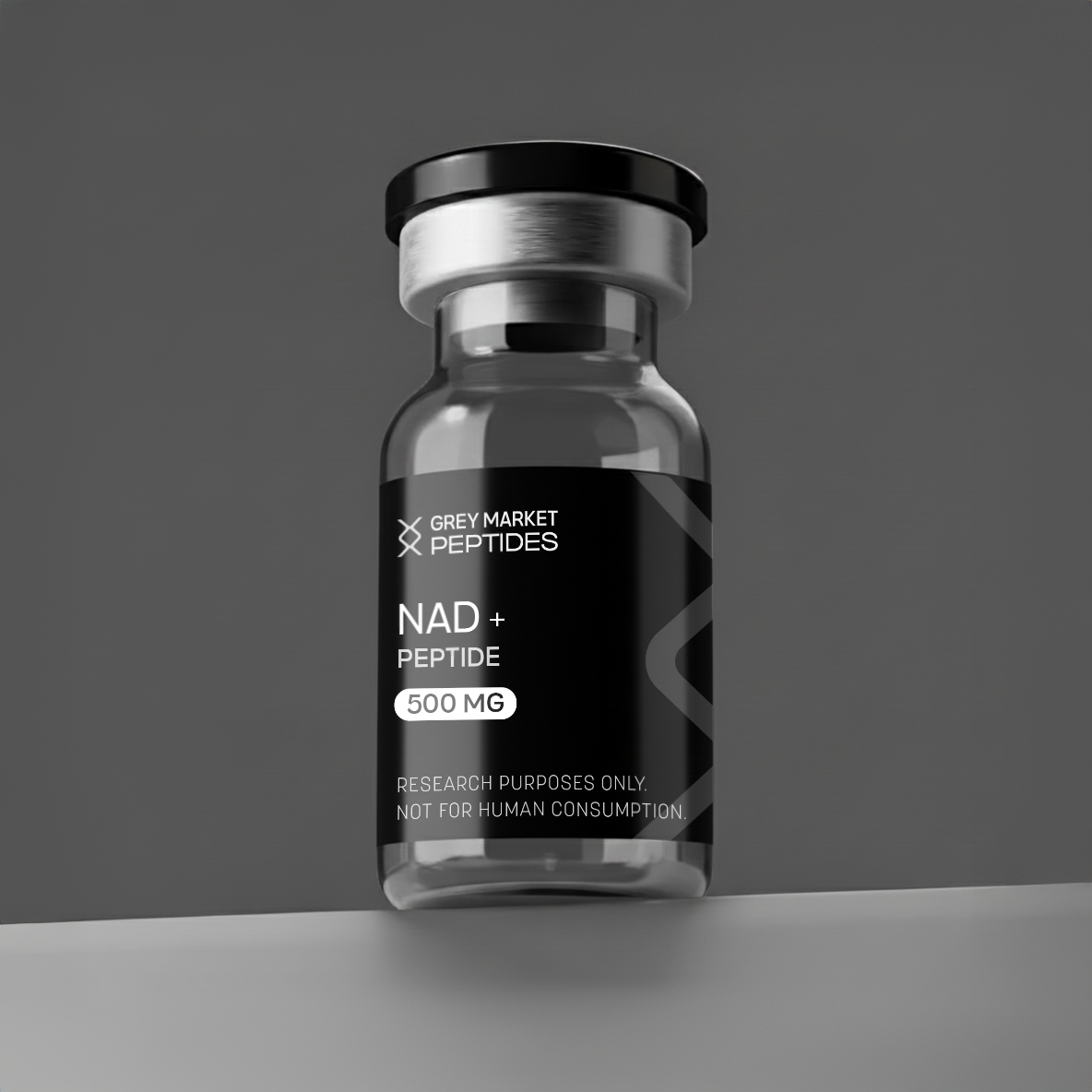
NAD⁺ Peptide
NAD⁺ Peptide is studied in experimental models for its relationship with cellular energy metabolism, redox balance, and enzymatic signaling pathways [1,2].
This peptide is for research purposes only. Not for human consumption.
Description
Cellular Energy Metabolism
NAD⁺ is central to redox reactions and energy transfer within cells [1]. Research models explore how NAD⁺-related peptides influence metabolic signaling and enzymatic activity.
Redox and Enzymatic Signaling
Studies investigate NAD⁺-associated pathways involving sirtuins, PARPs, and metabolic enzymes [2]. These pathways are evaluated through molecular and biochemical markers.
Pathway Interaction Studies
NAD⁺ Peptide is often included in comparative studies examining interactions between metabolic and stress-response signaling networks [1].
Key Specs
- Molecule class: NAD-related peptide
- Research context: energy metabolism, redox signaling
- References: PubChem, PubMed [1,2]
Referenced Citations
- PubChem, NAD⁺: https://pubchem.ncbi.nlm.nih.gov/compound/NAD
- PubMed, NAD metabolism and signaling: https://pubmed.ncbi.nlm.nih.gov/25671459/
Cellular Energy Metabolism
NAD⁺ is central to redox reactions and energy transfer within cells [1]. Research models explore how NAD⁺-related peptides influence metabolic signaling and enzymatic activity.
Redox and Enzymatic Signaling
Studies investigate NAD⁺-associated pathways involving sirtuins, PARPs, and metabolic enzymes [2]. These pathways are evaluated through molecular and biochemical markers.
Pathway Interaction Studies
NAD⁺ Peptide is often included in comparative studies examining interactions between metabolic and stress-response signaling networks [1].
Key Specs
- Molecule class: NAD-related peptide
- Research context: energy metabolism, redox signaling
- References: PubChem, PubMed [1,2]
Referenced Citations
- PubChem, NAD⁺: https://pubchem.ncbi.nlm.nih.gov/compound/NAD
- PubMed, NAD metabolism and signaling: https://pubmed.ncbi.nlm.nih.gov/25671459/
Reviews
There are no reviews yet.